The Perfect Ketchup: Balancing Sweetness, Spice, and Tomato
Our head food scientist shares the philosophy behind Continental Ketchup and why slow-cooking is non-negotiable.
What Makes a Great Ketchup?
The difference between forgettable ketchup and one that makes people pause mid-bite comes down to three factors: ingredient quality, ratios, and time. Most commercial ketchup is made from tomato paste reconstituted with water, loaded with high-fructose corn syrup, and cooked as quickly as possible. The result is sweet and acidic but one-dimensional.
Commercial Ketchup vs Slow-Cooked: The Difference
| Factor | Commercial Ketchup | Slow-Cooked Premium |
|---|---|---|
| Tomato source | Reconstituted paste + water | Vine-ripened whole tomatoes |
| Primary sweetener | High-fructose corn syrup | Natural tomato sugars + minimal cane sugar |
| Cooking time | 30-60 minutes | Several hours slow simmer |
| Preservatives | Sodium benzoate, potassium sorbate | None |
| Color source | Artificial colors often added | Natural from concentrated tomatoes |
| Flavor profile | One-dimensional sweet-sour | Complex with smoky depth and warmth |
Our Slow-Cooking Process
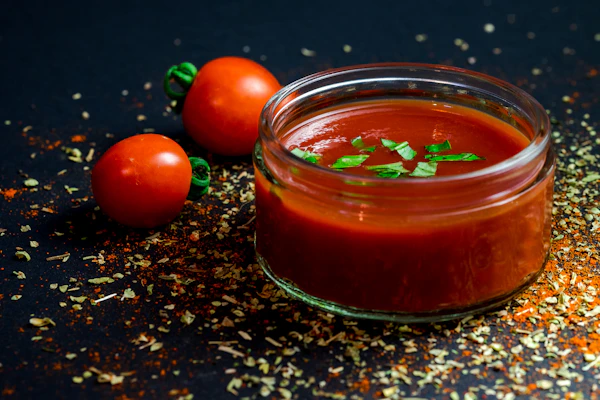
Continental Sauce starts with vine-ripened tomatoes - not paste, not concentrate, but whole tomatoes picked at peak ripeness when natural sugars are highest. This means less added sweetener and richer tomato flavor. The base simmers for hours with whole cloves, cinnamon bark, and aromatic herbs. Slow cooking allows the Maillard reaction - the same chemistry that makes caramelized onions irresistible - to develop deep, complex flavors.
The Spice Blend: Warmth Without Aggression
The philosophy is straightforward: warmth without aggression. Cloves provide woody depth. Cinnamon adds gentle sweetness. A touch of heat rounds it out. Each spice is added at a specific stage of cooking because different compounds release at different temperatures. The final product has no artificial preservatives, no added colors, and no corn syrup.
Ketchup vs Sauce: What Is the Difference?
While "ketchup" and "sauce" are sometimes used interchangeably, they have distinct definitions. Ketchup is specifically a thick, tomato-based condiment with higher tomato paste concentration and controlled sugar-to-vinegar ratios. Tomato sauce is thinner, more vinegar-forward, and often contains more varied spices. Ketchup is a finished condiment ready to use directly, while sauce is frequently used as a cooking base. Premium tomato sauces often have higher tomato content and lower sugar than commercial ketchups.
How to Use Premium Ketchup
- Classic condiment with burgers, fries, and sandwiches
- Dipping sauce for grilled paneer tikka or pakoras
- Cooking base for shakshuka (eggs in tomato sauce)
- Marinade ingredient mixed with spices for grilled meats and vegetables
- Pizza sauce substitute for quick homemade pizzas
- Stir-fry sauce base for Indo-Chinese dishes
Frequently Asked Questions
What is the difference between ketchup and sauce?
Why is slow-cooked ketchup better?
What makes premium ketchup different from regular ketchup?
Does premium ketchup have less sugar?
How long does natural ketchup last without preservatives?
Continental Sauce
A sophisticated blend of vine-ripened tomatoes, cloves, and a secret infusion of aromatic herbs.
View Product